
Can pleasure be healing?
- Love Atiya

- 6 days ago
- 5 min read
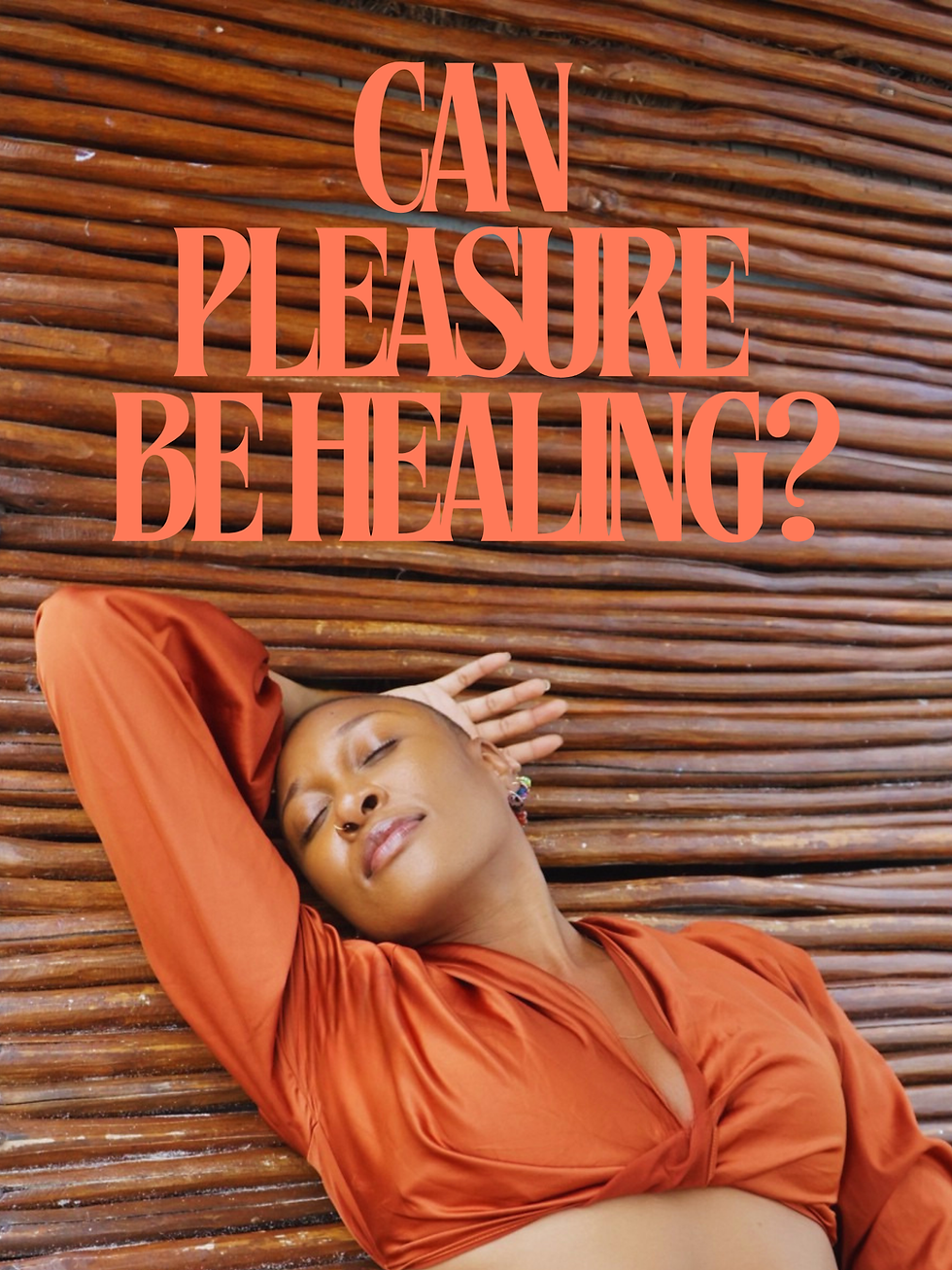
Can pleasure be healing?
Physiologically, pleasure is medicinal.
In the holistic sexology school that I’m attending at the time of writing this their slogan is “Pleasure is medicine.”
That’s because it’s true! Pleasure absolutely without a doubt is medicine.
Our body is so wonderfully intuitive & mixes up a luxurious cocktail consisting of many, many hormones that basically guide our mind, body and emotions daily.
When I learned how different parts of my body communicated with each other & how there were so many different wheels that my body was turning internally to keep me alive and thriving, I was ASTONISHED.
It was equally as astonishing for me to learn that when it comes to duality, our hormones definitely did their thing when it came to offering the favorable hormones with a mix of those that alert us when potential harm is nearby.
Cortisol and adrenaline are two of the main hormones that are pumped when we are scared, stressed, angry or a mix of everything in between.
These two hormones also impact the amount of pleasure we feel and the way we feel it (or don’t).
Sure, it could be easy to count cortisol and adrenaline out and chuck them to the side so that we can focus on feeling the more invigorating hormones, but these not so fun hormones also have a necessary place in our bodies and are a part of what keeps us alive.
If you’ve heard the term “fight or flight”, adrenaline and cortisol are the hormones that help our bodies decide what the safest move to do is in a matter of potential danger.
Now, when it comes to individuals like myself who have experienced an immense amount of traumatic events, our wires can often become crossed up or even over accelerate (more on that when we speak on trauma information holistic healing) and can have us read safe situations as dangerous simply because our bodies are used to feeling like we are in constant danger or stress.
But overall, we, just like the animals we share this earth with, can work with those hormones in time of need and send the healthy signals to our brains that let us know when it’s safe to feel the more enjoyable hormones again.
Notice that I’m not calling them “good” or “bad” hormones. There’s no need to shame the beautiful concoction that our bodies produce to keep us here.
Now for this article I’m going to focus on three specific pleasure hormones. Oxytocin, Dopamine and Serotonin.
Oxytocin: The Connection Hormone
Oxytocin is often called the "love hormone" and for good reason.
Oxytocin is released during hugging, cuddling, kissing, sexual activity, orgasm, breastfeeding, and even moments of emotional connection.
Have you ever cried while someone held you and somehow felt better afterward? That my love, is oxytocin doing some of her magic.
Oxytocin can help us feel bonded, connected, and safe. It reminds our nervous system that not every interaction is a threat and that there are people, places, and experiences that can hold us with care.
As someone who has spent years healing from trauma, I cannot tell you how powerful safety has been in my healing journey.
I’m not just talking about physical safety. I’m also talking about emotional safety. The kind that lets your shoulders drop, lets you exhale and reminds your body that it doesn't have to be on guard every second of the day.
Pleasure has the ability to help create some of those moments.
Not because pleasure magically fixes everything per-say, but because pleasure can remind the body what safety feels like.
Dopamine: The Reward Hormone
Now let's talk about dopamine. Dopamine is often associated with motivation, desire, reward, and anticipation.
It's the little burst that makes you excited to see someone you love.
It's the feeling you get when you're looking forward to a vacation.
It's the satisfaction of checking something off your to-do list.
It's also released during pleasurable experiences, including sex and self-pleasure.
What I love about dopamine is that it reminds us that deep joy matters!
So many of us have been taught to survive, push through, be productive, hustle, sacrifice. But very few of us were taught how to enjoy our lives.
Pleasure teaches us that we deserve experiences that feel good.
Not because we've earned them or because we've suffered enough but simply because we're alive.
Serotonin: The Contentment Hormone
Last but certainly not least, let's talk about serotonin.
Serotonin is often associated with mood, emotional well-being, and feelings of contentment.
While dopamine is the excitement of getting something you want, serotonin is more like the feeling of sitting back and appreciating what you already have.
It's the deep breath you take after spending a beautiful afternoon in nature.
It's the warmth you feel while you’re watching a sunset.
It's the sense of peace that can come from meaningful connection, movement, gratitude, or simply being present in the moment.
As someone who has struggled with anxiety for much of my life, I think serotonin deserves a lot more credit.
Many of us spend so much time chasing the next thing. The next goal, the next accomplishment, the next milestone that will finally make us feel happy.
But serotonin reminds us that joy doesn't always have to be earned through achievement.
Sometimes joy can be found in the quiet moments.
Sometimes pleasure isn't loud, exciting, or explosive.
Sometimes pleasure looks like drinking your morning coffee slowly instead of rushing through it.
Sometimes pleasure looks like sitting in the sun.
Sometimes pleasure looks like laughing with a friend until your stomach hurts (seriously, this is medicinal as heck).
Sometimes pleasure looks like feeling at home within yourself.
I think that's one of the reasons pleasure can be so healing.
It invites us back into the present moment & helps us notice what is already good, already beautiful, and already worthy of our attention.
And in a world that constantly tells us to keep chasing more, that kind of contentment can be incredibly powerful.
Again, notice that I'm not saying pleasure cures everything.
Pleasure is not a replacement for therapy.
Pleasure is not a replacement for medical care.
But pleasure can absolutely become one of the tools we place inside our healing toolbox.
So, Can Pleasure Be Healing?
I think the answer is yes!
Does pleasure erase our pain? No.
Unfortunately, one orgasm suddenly undoes years of deep trauma.
And a bubble bath unfortunately cannot magically fix systemic oppression (yet it can definitely help relax our muscles while we’re fighting the good fight).
But pleasure reminds us that we are more than our suffering.
Pleasure creates moments where our bodies can experience safety, joy, connection, play, rest, and aliveness.
For many of us, especially those who have experienced trauma, shame, grief, oppression, or chronic stress, those moments can be incredibly healing.
Healing doesn't always look like digging up old wounds.
Sometimes healing looks like laughing until you snort.
Sometimes healing looks like dancing barefoot in your living room.
Sometimes healing looks like eating your favorite meal.
Sometimes healing looks like self-pleasure.
Sometimes healing looks like allowing yourself to feel good without immediately wondering when the other shoe will drop. This is one I’m still working on, gently and with grace.
Perhaps that's why pleasure feels so revolutionary.
Because in a world that often profits from our exhaustion, our disconnection, and our self-criticism, choosing pleasure becomes an act of reclamation, a declaration, a homecoming.
A reminder that your body was never designed only to survive.
It was designed to feel and maybe, just maybe, that feeling is part of the healing.
I love you to the moon and beyond my loves.
If you want to learn about ALL of the ways you can invite more pleasure into your world then you are more than welcome to exploreThe Ethereal Pleasure Oasis pleasure portal and for a more curated experience you can check out my 5 week pleasure program created for beautiful, curious, embodied souls like YOU.
Xoxo
Love Atiya
The Ethereal Pleasure Oasis
Can pleasure be healing?


Comments